Your data is not the product
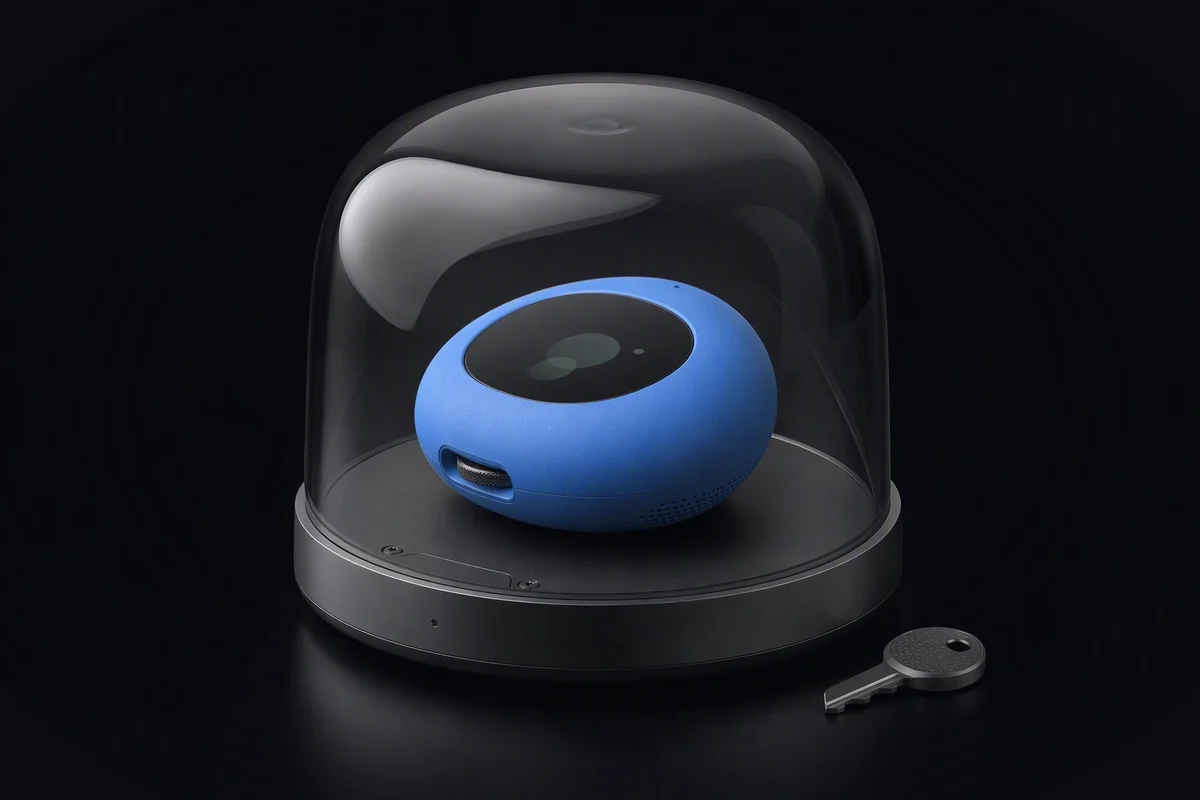
Late one evening you mention to your assistant that you have not been sleeping and that money is tight this month. A week later the feed you scroll is full of sleep aids and short-term loans. Nobody sold your conversation in the legal sense. Nothing leaked. The assistant simply worked for its real customer.
Whether or not that exact chain happened to you, you have no way to rule it out, and that is the problem. The most intimate tool you will ever use is being offered by businesses whose income depends on knowing you.
The real cause: the business model decides what an assistant is for
An assistant is shaped by whoever pays for it. When the money comes from advertising, from data or from keeping you engaged, every design decision bends towards those things, however good the intentions of the people building it. That is not a moral failing of any one company. It is what a business model is. That is why “is this company honest?” is a less useful question than “what does it live on?”
And an assistant is the most valuable sensor that model has ever had. A search engine sees what you look for. A personal assistant sees what you worry about, whom you love, what you can afford and what you are planning. The better it does its job, the more it is worth to someone other than you.
How “we respect your privacy” goes wrong
Free means paid for by someone else. If you are not paying for the compute, someone is, and they expect something back.
“We do not sell your data” is a narrow sentence. It usually leaves room for using it: to train models, to target, to “improve services”, to share with partners under another name. Read the verbs, not the headline.
Kept by default. Conversations are stored unless you find the switch, and deleting them from your view does not always delete them from theirs.
Terms that change after you have told it everything. You accepted a policy. The policy has a version number. Your memory gets no vote when the next version arrives.
Loyalty as a setting. When an assistant recommends a restaurant, a product or a route, you cannot tell whether that is its best judgement or someone’s paid placement. Often, neither can the people who built it.
What to build instead
Promises are not enough, because promises can be rewritten. The answer has to be structural, so that misusing your data is impossible rather than merely forbidden. KyberBot is pre-launch; this is the structure we are building it on.
We do not hold it. Your memory lives on your hardware, encrypted with keys you keep. We cannot sell, mine or hand over what we do not have. The hardware side of the same rule, including switches that cut the microphones with a circuit rather than a setting, is in Hardware that does not report on you.
What leaves, leaves narrowly. When a task needs more power than your devices have, only the brief for that task travels, to a node built to keep it unlinked from you. Anonymity there is a design goal we are building towards, not a claim we can make today; what a node can and cannot see is set out in What a cloud node knows about you.
One customer. No advertising, no data brokers, no placement deals. KyberBot’s recommendations are its judgement on your behalf, and its record shows why it made them.
Leaving is a file copy. Your memory exports in an open format. An assistant you cannot leave is an assistant that no longer has to earn your trust.
So who pays? You pay for things in the ordinary way: hardware you buy, and compute you use beyond your own devices. The ecosystem around KyberBot is run as a DAO and earns in several ways together; that income keeps the infrastructure running and funds development. Compute in KyberFusion is settled in tokens. A token is a unit of settlement for compute, not an investment, and nothing here promises anyone a return. This is not an offer. The longer answer is in We do not sell data. So who pays for the cloud?
A test you can run today
Open the privacy policy of the assistant you use most and answer four questions in writing.
- Are my conversations used to train models? By default, or only if I opt in?
- Are they used for advertising or “personalisation” in any other product?
- How long are they kept after I delete them?
- Who can change these answers, and what do I have to do to keep the old ones?
If the answer to the last question is “they can, and you accept by continuing to use it”, your data is part of the product, whatever the headline says. KyberBot is built so that the answer is “nobody but you”, because the data sits on your shelf and the keys are in your pocket.
- privacy
- business model
- data
- trust