An assistant that listens, not one that transcribes
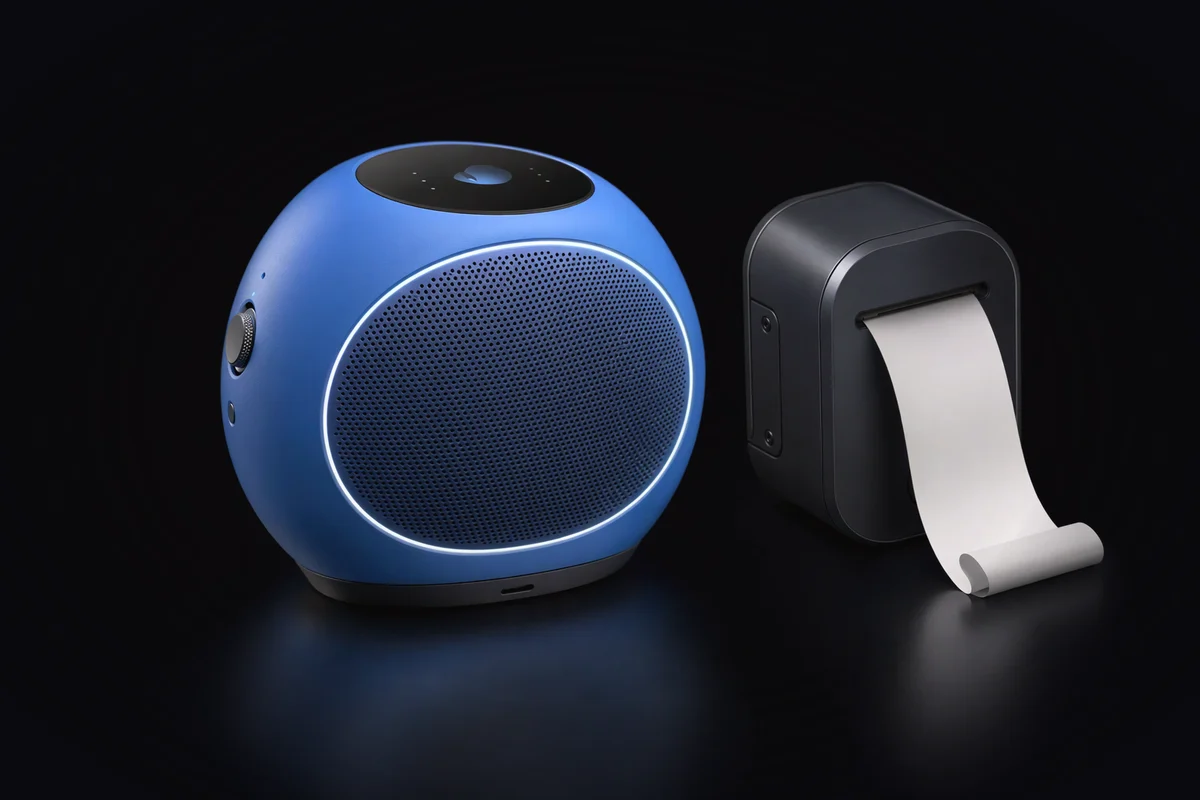
You are driving, it is raining, and you say to your assistant: “Move tomorrow’s meeting with… no, wait, not tomorrow’s. The Thursday one. And tell Martha I’ll be late.” The assistant turns that into text, the text goes to a model, the model answers in text, and a synthesiser reads the answer: “I’ve moved tomorrow’s meeting.” The correction came mid-sentence, in a tone any person would have understood at once. In the transcript it survived as the word “no” between two commas.
That evening someone at home asks the assistant the same thing they asked in the morning, only in a voice that says they have had enough. The answer is just as cheerful and just as long as it was at breakfast.
Nothing broke in either case. The assistant did exactly what it was built to do: it wrote down the words and replied to the record.
The real cause: the conversation was turned into a document
Most voice assistants are three separate machines standing in a row. The first turns speech into text. The second, a language model, reads that text and writes a reply. The third reads the reply aloud. Each does its job well, but between the first and the second everything that cannot be spelled is lost: tone, pace, hesitation, the fact that someone interrupted, and who is actually speaking.
Transcription is not listening. It is the minutes of a conversation, taken by someone who left the room before the point was made.
What Gartner says
Gartner put speech reasoning models second on its list of ten strategic technology trends for 2027. It describes them as systems that “reason directly on audio”: they track context and intent across a conversation and skip the step of turning speech into text. That is meant to let them handle multi-step problem solving, changes of subject and recovery from mistakes.
In the e-book, Gartner predicts that by 2030 over 70% of enterprise voice interactions will be handled autonomously by speech models, up from less than 10% in 2026. That is an analyst forecast about companies and their phone lines. Gartner adds a point that bears directly on a personal assistant, though: voice is becoming the main interface for robots too, that is, for SI that has a body.
The rest of this post is our own conclusion, not Gartner’s.
What a model that listens can hear
A correction mid-sentence. “No, wait”, said quickly and with stress, means “undo what I just said”. In audio that is obvious. In text it has to be guessed.
An interruption. When you start talking during an answer, the assistant should fall silent and listen. The three-machine arrangement first has to notice that you are speaking, stop the synthesiser and start a new transcript. A model that works on audio hears you the whole time.
Hesitation and certainty. “Tuesday, I think” and “Tuesday” are two different pieces of information. The first asks for confirmation before anything goes into the calendar; the second does not.
Who is speaking, and to whom. In a kitchen with three people, not every sentence is a command for the assistant. Sound carries direction, distance and the colour of a voice. A transcript carries only words.
The state of the speaker. A tired voice at eleven at night does not need three paragraphs. It needs one sentence and quiet.
Where it breaks
An assistant that hears more knows more. That is the benefit and the cost at once.
Tone is data about you. A voice gives away tiredness, irritation, sometimes health. A record of the words never contained that. A speech model has it from the first second, whether you want it to or not.
Raw audio is more sensitive than text. A recording holds your voice, the voices of other people in the room and the background. Whoever stores the recording stores far more than the content of the conversation.
An inference instead of a question. An assistant that “hears” you are upset may start acting differently without a word of explanation: postponing a reminder, shortening a message, leaving out a detail. Guessing a mood is sometimes right. It is sometimes wrong, and then you do not even know something was left out.
No trace. The text in the middle was a flaw, but it was also evidence: you could check what the assistant heard. When the reasoning happens on audio, that trace has to be designed separately.
Latency. Deeper reasoning takes time. In conversation, half a second of silence is natural; two seconds sound like a fault.
What to design instead
KyberBot is pre-launch. What follows are design rules, not a description of shipped features.
Listening starts locally. Detecting that someone is addressing the assistant, recognising an interruption and handling simple commands should run on the device you carry or keep at home. Audio that does not need to leave the room does not leave it. It is the same principle that applies to memory, described in An assistant that knows you.
Two tiers, chosen by difficulty. The fast tier answers simple things at once: a timer, the time, “quieter”. The deeper tier gets what needs thought and says so plainly: “checking, one moment”. Gartner recommends that companies split conversations in a similar way, between fast ones and ones that need reasoning; in a personal assistant the same split also decides what stays on the device.
Raw audio is not memory. The assistant remembers what was agreed, not recordings. The audio is gone once the exchange is over, unless you explicitly ask to keep a particular fragment.
Mood shapes the form, it does not enter the profile. The assistant may answer more briefly when it hears tiredness. It does not store “was upset on Tuesday evening” as a fact about you until you decide you want that kind of memory and can see what is in it.
An inference from tone never replaces asking before acting. Hesitation in a voice is a reason to ask, not a reason to decide for you. Anything sensitive still needs clear consent, given in words.
Every exchange leaves a readable trace. Not a recording, but a short note: what the assistant understood, what it did and on what basis. If it heard a correction, the trace says “changed from tomorrow to Thursday”. You can read it and dispute it.
Other people’s voices are not your data. Guests and household members who are not talking to the assistant are not analysed by it. Who the assistant answers, and on which channel, is the subject of What the assistant says aloud and what only to you.
A test you can run today
Take the voice assistant you use and try three things.
- A correction. Give a command and correct yourself mid-sentence: “set an alarm for six, no, half past six”. Check what was set.
- An interruption. Ask a question with a long answer and cut in with a new command. Count how long it takes to fall silent, and whether it heard what you said in the meantime.
- The trace. Open the settings and look for the history. Are recordings of your voice there? For how long? Can you delete them in one move?
If the assistant set six o’clock, kept talking for three seconds, and the history holds recordings from a year ago, it transcribes and stores, but it does not listen. We are designing KyberBot the other way round: it should hear what matters in a voice and remember only the part of it you agree to.
Sources
- Gartner Press Release, “Gartner Identifies the Top Strategic Technology Trends for 2027”, October 20, 2026. gartner.com
- Gartner, “Top 10 Strategic Technology Trends for 2027”, e-book, October 2026. gartner.com
Gartner’s predictions are analyst opinions as of the date of publication. The design rules and the test are ours.
- voice
- speech models
- privacy
- latency
- 2027 trends